We brought Sensinuity in to consolidate the design of a prototype. That single decision saved a huge amount of time on the project, time we could put straight back into the research. We recently used the consolidated prototypes to demo our new sensing technologies, and the devices worked perfectly.
What stood out just as much was the attention to our specific requirements. Nothing was assumed, and every decision was made around what we needed rather than pushed toward a generic solution. Whenever I asked about a particular part of the design, they took the time to explain it properly so I always understood what was being done and why. The team also allowed for futureproofing as our port count expanded, extending both the working life of the system and the range of experiments it can support.
I’d happily work with Sensinuity again, great company to work with to accelerate engineering phases of research.
The problem
The team’s prototype was a collection of 3D-printed parts assembled by hand as the research developed. It worked, but it was difficult to clean, maintain and rebuild, and every hour spent on engineering was an hour taken away from the research itself.
What we built
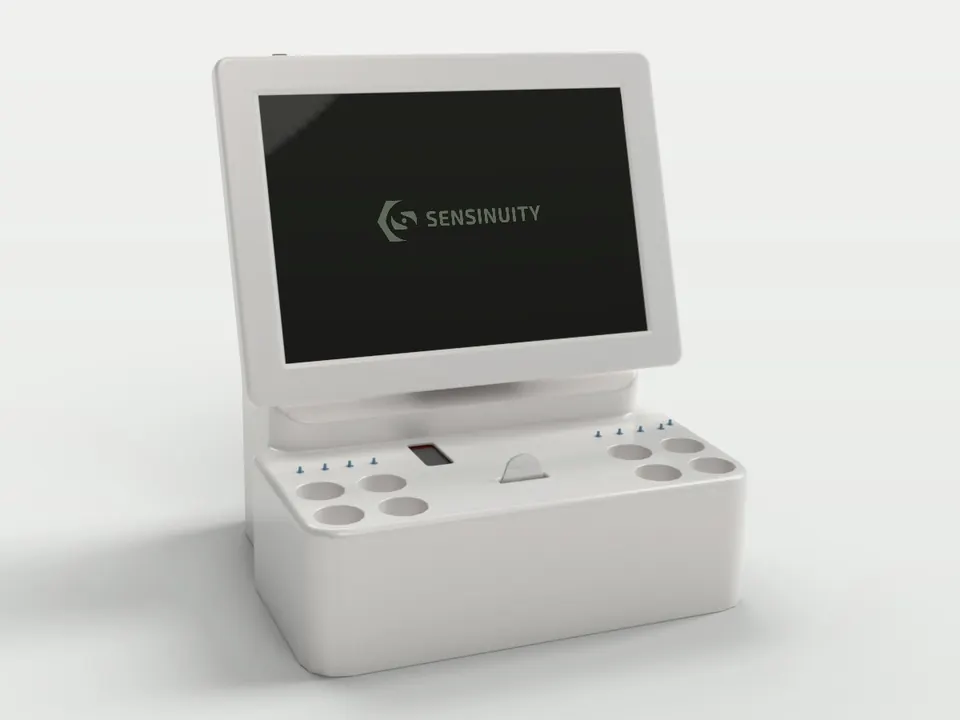
We designed a workflow-optimised instrument around the team’s specific requirements: easy to clean and maintain, and flexible enough to adapt as the requirements evolved. The brief asked for four fluidic ports; we designed in eight, each with its own valve and controller, so new capability can be added without a rebuild. The project covered design, evaluation software, testing, commissioning and handover, and we explained each design decision so the team always understood what was being done and why.
The result
Two identical instruments were built and shipped in about three months, and have since been used to demonstrate the team’s new sensing technologies, working perfectly. The time saved went straight back into the research, and the extra ports extend both the working life of the system and the range of experiments it can support.
Outcomes
What changed
Have a project in mind?
Tell us where you are and what you need. We’ll come back within two working days with next steps, with an NDA first if you need one.